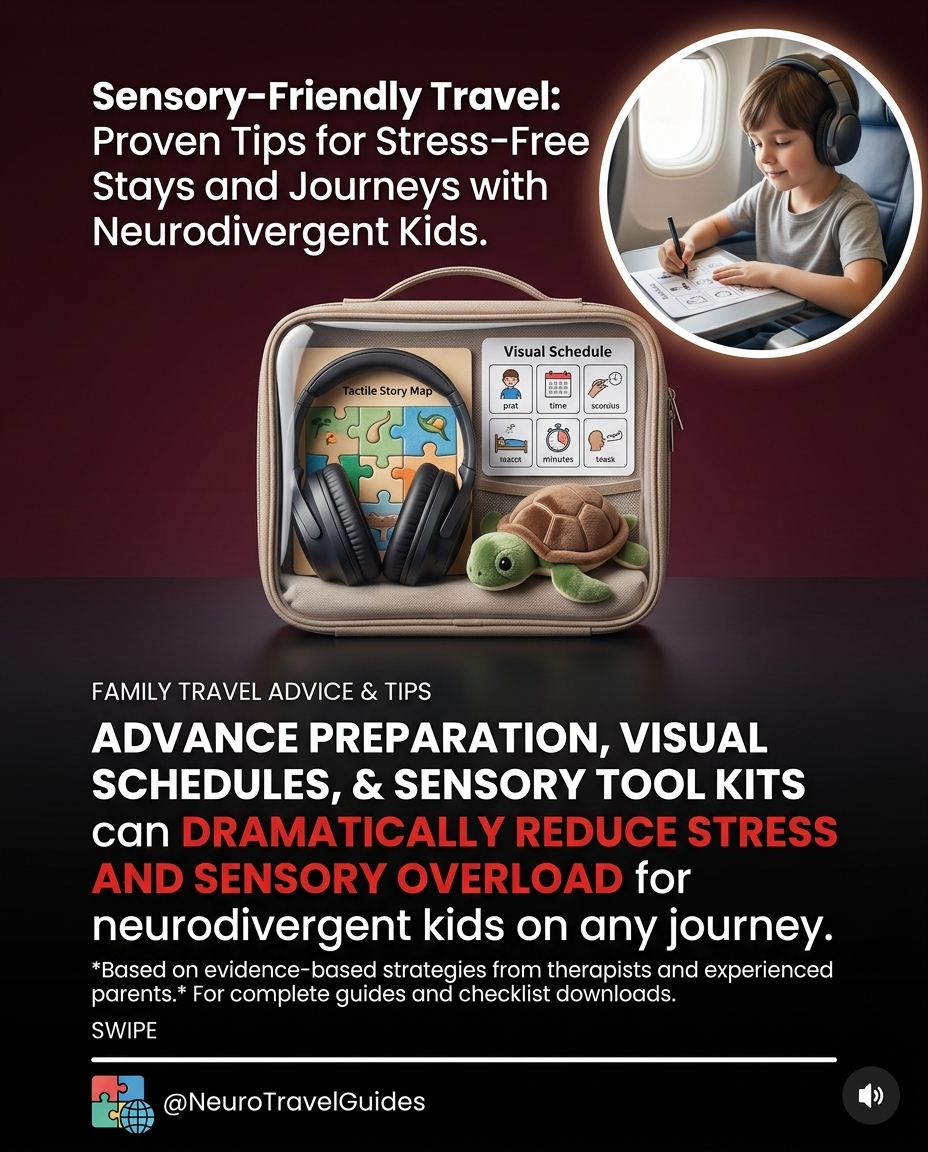
Sensory-Friendly Travel: Proven Tips for Stress-Free Stays and Journeys with Neurodivergent Kids
Family travel brings unique challenges for neurodivergent kids, especially when factoring in sensory needs, unexpected transitions, and fatigue. With structured planning and accessible strategies, you can turn trips from stressful to restorative.
Preparation is foundational. Preview your travel schedule visually,use social stories or picture schedules to outline each phase: packing, transport, arrival, and activities. Identify known triggers (crowds, noise, hunger) and build routines for key transitions, like moving from car to hotel room.
Engineering a sensory-friendly environment starts with lodging. Prioritize quiet rooms, blackout curtains, and accessible amenities. Pack comfort items: headphones, weighted blankets, familiar snacks, and sensory toys. For travel, choose transport with reliable schedules and build in buffer time to reduce stress.
Apply the RBT (Registered Behavior Technician) lens by:
– Pre-teaching travel rules (staying with adults, asking for breaks)
– Reinforcing positive transitions with clear, simple praise
– Planning recovery spaces where your child can decompress
Cognitively, anticipate overload by breaking days into manageable segments. Schedule downtime between outings; avoid overpacking your itinerary. Monitor for fatigue signals and allow for flexible adjustments.
For parent support, share expectations with all caregivers and involve everyone in therapeutic packing and planning. Utilize visual checklists and keep emergency calming kits accessible.
By embracing logistical planning, behavioral strategies, and empathy, you can create travel systems that adapt to your child’s sensory and cognitive needs, turning potential stressors into memorable, inclusive journeys
### **Ready to make travel magical again? ✈️**
👉 **FOLLOW** our page for tips, neurodivergent-friendly hacks, and community support! 👉 **PLAN YOUR NEXT AUTISM-FRIENDLY VACATION TODAY** by clicking the link in our bio
Leave a Reply