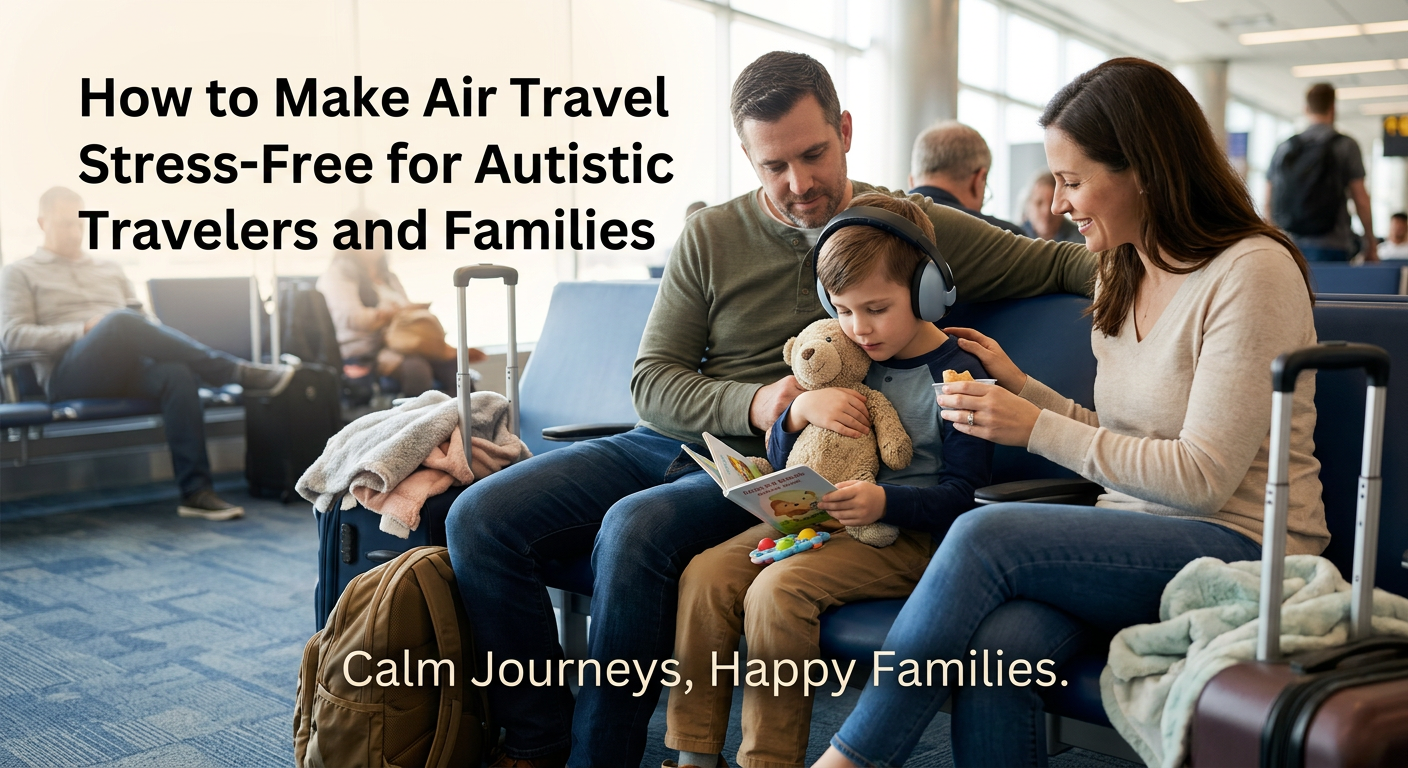
How to Make Air Travel Stress-Free for Autistic Travelers and Families
Air travel presents unique challenges for autistic travelers and their families, ranging from unpredictable sensory inputs to complex logistical requirements. A successful trip comes down to preparation, clear routines, and intentional reduction of environmental triggers.
Pre-Trip Planning
– Research airline and airport accessibility policies. Many airlines now offer “special assistance” programs,request these when booking.
– Notify airlines early about accommodations, such as pre-boarding, quiet seating, or dietary needs.
– Practice airport routines at home: role-play check-in, security, and boarding to build familiarity.
– Prepare a visual schedule or social story explaining each step of the journey.
– Build in buffer time,rushing increases stress for everyone.
Engineering Breakdown
1. Pack strategically:
– Use a carry-on sensory kit: headphones, fidgets, comfort items, snacks.
– Include documents and comfort scripts for security checks.
1. Plan transitions:
– Use visual timers or apps to alert for changes (e.g., boarding calls).
– Outline hand-offs between phases (home-car-airport-plane).
1. Minimize fatigue:
– Select flights at less crowded hours.
– Schedule recovery periods on arrival.
Sensory and Cognitive Support
– Identify key triggers (noise, lights, crowds) and prepare mitigations (noise-canceling headphones, sunglasses, or seat selection).
– Use routines for waiting periods to maintain predictability.
– Offer frequent regulation breaks,walks, stretching, quiet time.
Empathetic Parent Strategy
– Delegate tasks: one adult manages logistics, another focuses on emotional support.
– Validate your child’s feelings and narrate each step calmly.
– Debrief post-travel to learn what worked,and make each future trip smoother.
With systematic planning, air travel can become more manageable for neurodivergent families,making exploration possible, and enjoyable, for everyone.
Leave a Reply