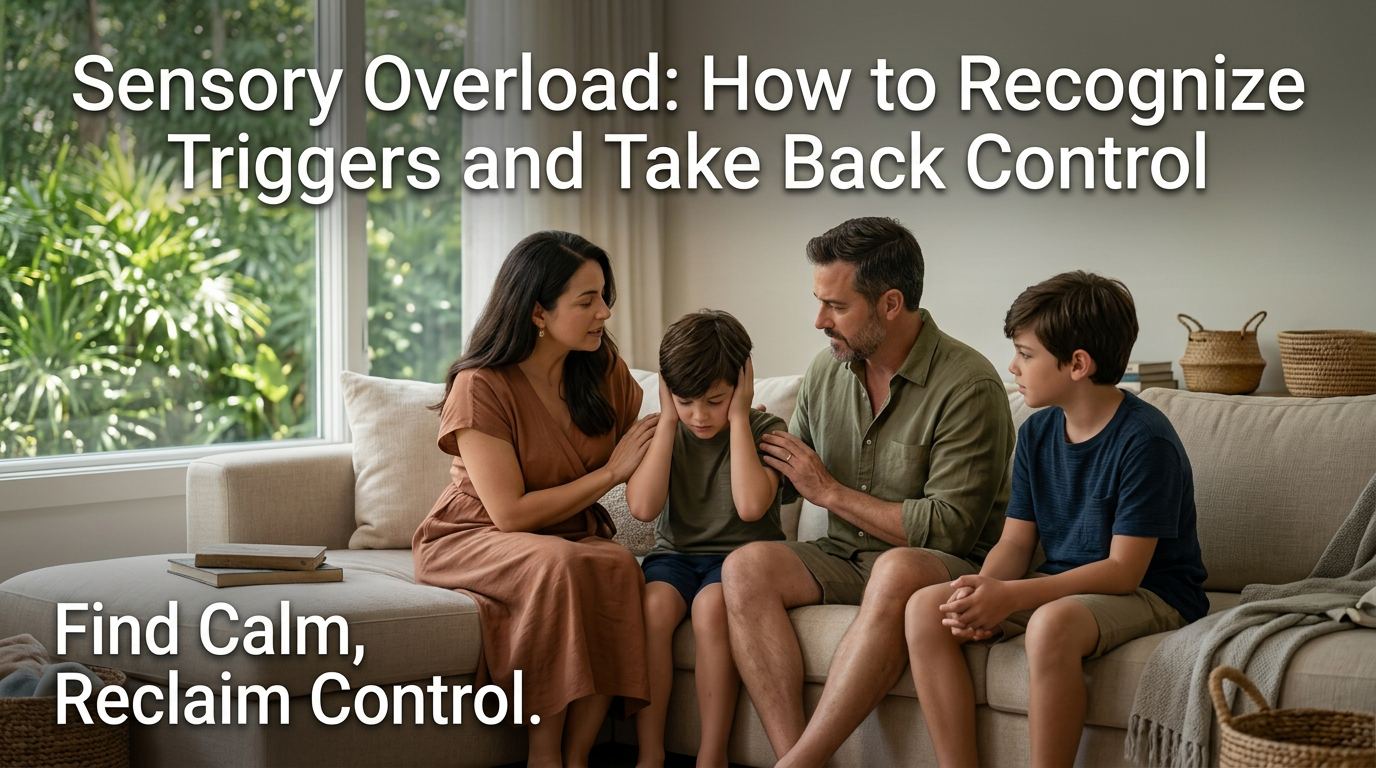
Sensory Overload: How to Recognize Triggers and Take Back Control
Introduction
Sensory overload occurs when incoming information overwhelms the brain’s ability to process it. This is especially common in neurodivergent children, but can affect anyone. Triggers include loud noises, visual clutter, or unexpected changes. Proactive planning and understanding triggers can reduce overwhelm and support regulation.
Planning Guidance
Step-by-step preparation is essential.
– Identify high-risk situations: crowded venues, noisy classrooms, busy routines.
– Build predictability: Use visual schedules, timers, or social stories.
– Monitor energy and fatigue: Plan breaks before overload hits.
Engineering Breakdown
1. Assess environment,look for excessive stimuli (noises, smells, lights).
2. Design “calm corners” or escape options.
3. Create routines: Structured transitions, defined start/stop cues.
RBT Lens
– Use antecedent interventions: Prepare for transitions with countdowns or warnings.
– Reinforce regulatory strategies (deep breaths, fidgets, headphones).
– De-escalation: Redirect calmly and minimize demands during overload.
Sensory & Cognitive Perspective
Notice subtle cues: covering ears, avoiding eye contact, sudden irritability.
– Offer sensory supports (weighted items, alternative seating).
– Allow pacing: Recovery time is essential after overload.
Parent Support Strategies
– Collaborate with your child to identify triggers.
– Debrief after incidents without blame,focus on learning what helps.
– Keep self-care in mind: regulated adults model calm.
Hashtags: #SensorySupport #Neurodiversity #ParentingTips #BehaviorAnalysis
Leave a Reply