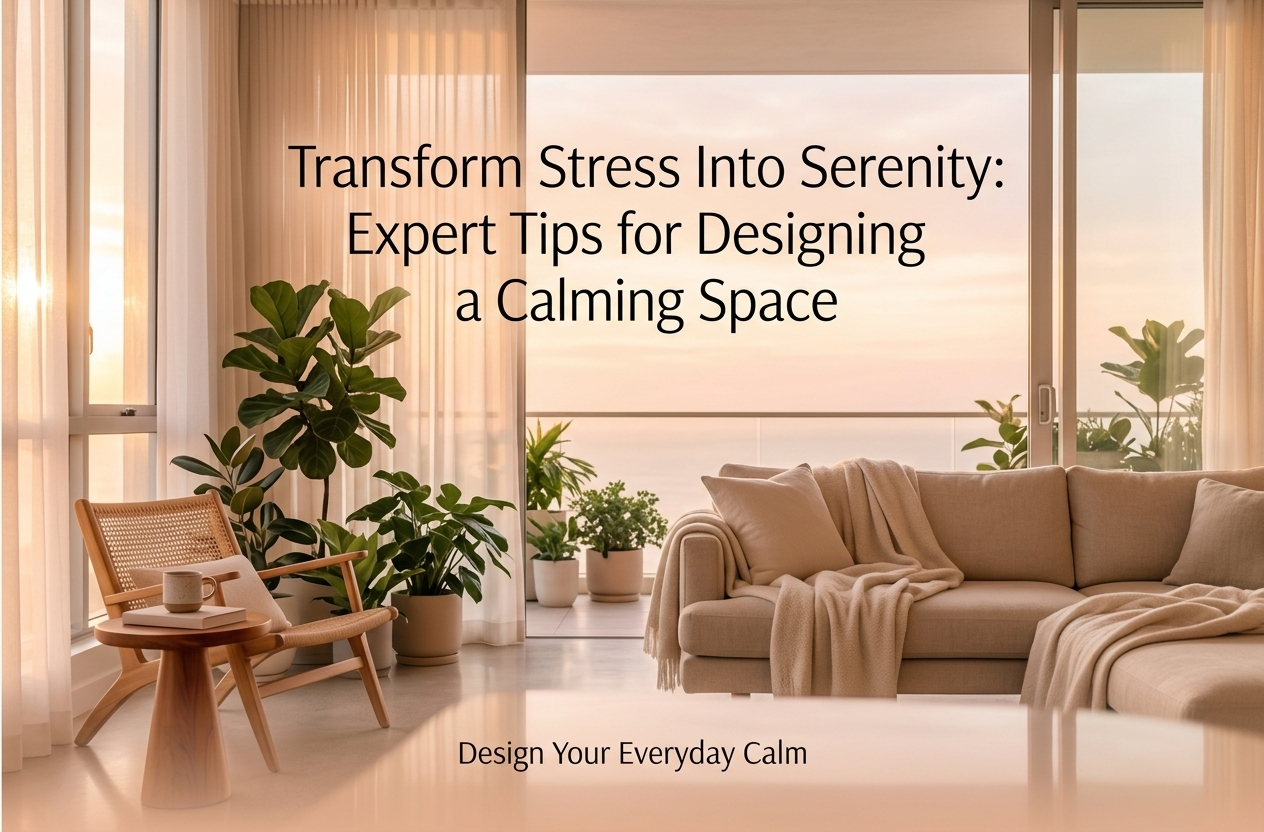
**Transform Stress Into Serenity: Expert Tips for Designing a Calming Space**
_What if your home could melt your stress away,every single day? Discover how a few expert tweaks can turn chaos into calm and give you the daily reset you crave. Ready to trade overwhelm for peace? Which room would you transform first?_
—
## The Engineering Breakdown: Your Logistics Map for Home Calm
When it comes to reducing daily stress, environment matters. Let’s engineer serenity,methodically and gently. Here’s how to break down your living space transformation for max impact with minimal overwhelm:
**1. Identify the “Stress Zones”**
– _Walk Your Space:_ Observe which rooms trigger hyperactivity, avoidance, or agitation. (Is the entryway a chaos “drop zone”? Maybe the noisy kitchen is the culprit!)
– _Rank Top Three “Hotspots”:_ Focus your efforts where nervous energy spikes.
**2. Simplify & Signal Calm**
– _Declutter in Sections:_ Don’t tackle the entire house. Pick _one_ surface per day,like the coffee table or a dresser top.
– _Sensory Signals:_ Place a textured cushion, a soft lamp, or muted colors in high-traffic areas. These small signals cue the brain: “You are safe here.”
**3. Create Micro-Rest Stops**
– _Designate a “Retreat Spot”:_ Even a corner will do,a beanbag by a window, a floor cushion, or a cozy chair with noise-canceling headphones nearby.
– _Portable Comfort Bin:_ Fill a basket with fidgets, a weighted lap pad, or a lavender sachet. Keep it visible but accessible.
—
## The RBT Lens: Success Strategies for Sensory & Behavioral Harmony
As a former RBT, I know that a calming environment is about more than pretty decor. It’s about _proactive supports that scaffold positive behavior_,even (especially) during transitions:
**1. Prime in Advance**
– _Show, Don’t Just Tell:_ Use visual schedules (phone photos, simple drawings) to preview the “before and after” of a calming space transformation. This helps reduce resistance to change.
**2. Layer Predictability**
– _Cue Calm Routines:_ Use the same background music or scent in your retreat spot at the same time each day (after school, right before bed). Routine = safety for sensory brains.
**3. Prep for Transitions In & Out**
– _Countdowns & Gentle Prompts:_ Give a 3-2-1 verbal countdown before entering or leaving a calm spot. “In three minutes, we’ll go back to the kitchen. First, we’ll wiggle fingers to say goodbye to our peaceful corner.”
—
## The TBI Perspective: Sensory Load Insights You Didn’t Know You Needed
I’ve lived with the silent undercurrent of mental fatigue since I was two. Here’s a tip only someone who’s been there can offer:
**Monitor “Environmental Creep”**
– Even calming spaces collect noise,think humming refrigerators, ticking clocks, or screens with subtitles left on. _Once a week, sit quietly in each space for two minutes._ Notice unseen sensory intrusions. A small change (moving a clock, silencing a pinging device) can save precious brain energy.
—
## The Parent Bridge: Your Moment of Peace
Parents, you are the heart of the home,but you also carry its heaviest load. _Your needs matter, too:_
**Find a “Micro-Moment” Every Day**
– While your child is practicing calm, give yourself permission to do _one small thing you enjoy_,sip an uninterrupted cup of tea, read a half-page of a book, or simply close your eyes for two minutes. Let the space you’ve created serve you, too.
—
—
**Quick-Win Summary Box**
– **Tackle One Stress Zone at a Time:** Start small; celebrate every win.
– **Use Predictable Routines:** Visual cues and sensory signals reduce anxiety for all brains.
– **Audit Environmental Noise Weekly:** Tiny tweaks can shield your family from hidden stress.
_Remember: Serenity isn’t a luxury. It’s an environment you can engineer,one strategic tweak at a time. Which room will you transform first?_
Leave a Reply