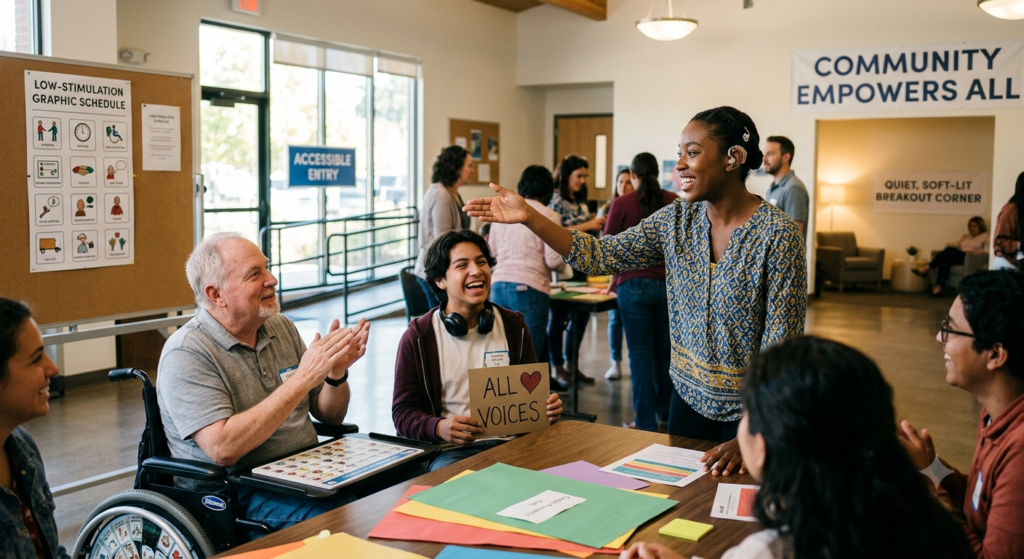
How Building Community Empowers Underrepresented People with Disabilities
Building a strong, inclusive community for people with disabilities is critical for dismantling barriers and promoting genuine opportunity. This article will translate these ideals into practical strategies,focusing on planning, logistics, sensory needs, and support systems to ensure all voices are not only heard but valued.
Planning for Accessibility
Start with a needs assessment,survey the environment for physical, sensory, and social barriers. Consider:
- Accessible entrances and seating
- Clear, low-stimulation signage
- Options for low-light or quiet zones
Decide on communication supports: visual schedules, AAC tools, and clear routines. Preparing all community members for transitions reduces anxiety and supports engagement.
Systems Thinking: Engineering a Welcoming Space
Break down your event or program like a process:
- Intake: gather accessibility needs.
- Environment: arrange seating, minimize crowding, control sensory input.
- Transitions: use timers and visual cues to prepare for changes.
- Recovery: offer break spaces and recovery plans for sensory overload.
RBT Lens: Navigating Triggers and Routines
Monitor individual triggers,noise, touch, unpredictability. Establish predictable routines and prepare alternative plans. Offer visual supports and check-ins to reduce uncertainty.
Cognitive and Sensory Awareness
Respect neurological diversity,allow pacing and frequent breaks. Understand that fatigue or overload isn’t defiance, but a sign to pause or adjust.
Supporting Parents and Caregivers
Provide clear schedules, preview routines, and ensure easy access to exits or quiet areas. Create space for feedback,empowering both families and self-advocates builds sustainable community change.
#DisabilityInclusion #CommunityEmpowerment #AccessibilityMatters #Neurodiversity #BehaviorSupport
Leave a Reply