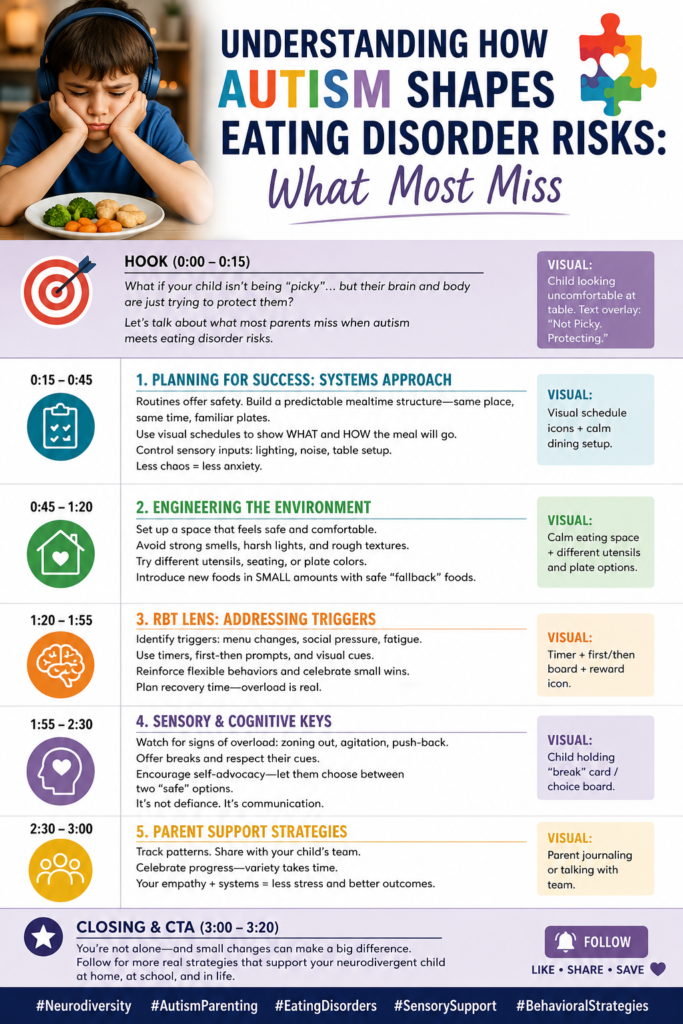
Understanding How Autism Shapes Eating Disorder Risks: What Most Miss
For parents and caregivers of neurodivergent children, food isn’t just about nutrition. It can become a daily battlefield, especially when autism intersects with eating disorder risks. Beneath the surface, sensory differences, routines, and anxiety can quietly shape how children experience meals,yet these root causes are often missed.
Planning for Success: Systems Approach
Step one is preparation. Routines offer safety for autistic children. Build a predictable mealtime structure,same place, similar time, familiar plates. Use visual schedules or checklists, previewing what and how the meal will unfold. Include sensory considerations such as lighting, noise, and table arrangement. Reduce unnecessary stimuli.
Engineering the Environment
Set up spaces that are physically accessible and calming. Avoid strong smells, sudden temperature changes, or rough textures. Experiment with utensils, seating, or plate colors that may reduce discomfort or stress. When introducing new foods, keep portions small and provide options for safe “fallback” choices.
RBT Lens: Addressing Triggers
Identify common triggers,unexpected menu changes, social pressure, or increased fatigue,and plan for them. Practice transitions by using timers or first-then prompts. Use reinforcement for flexible eating behaviors, building in recovery time if overload happens.
Sensory and Cognitive Keys
Notice signs of overload: zoning out, push-back, or agitation. Respect these cues and offer breaks. Encourage self-advocacy by letting the child voice preferences or choose from two acceptable alternatives. Remember, eating challenges can stem from a genuine sensory or emotional barrier rather than defiance.
Parent Support Strategies
Document patterns. Communicate regularly with your child’s team. Share successes and struggles. Celebrate comfort with variety, but respect the pace. Your systemized, empathetic approach can transform mealtimes and reduce hidden distress.
#Neurodiversity #AutismParenting #EatingDisorders #SensorySupport #BehavioralStrategies
Leave a Reply